Slow first response
Applicants wait without a named owner, a recorded contact attempt, or a clear next action.
Amazon DSP Recruitment Support
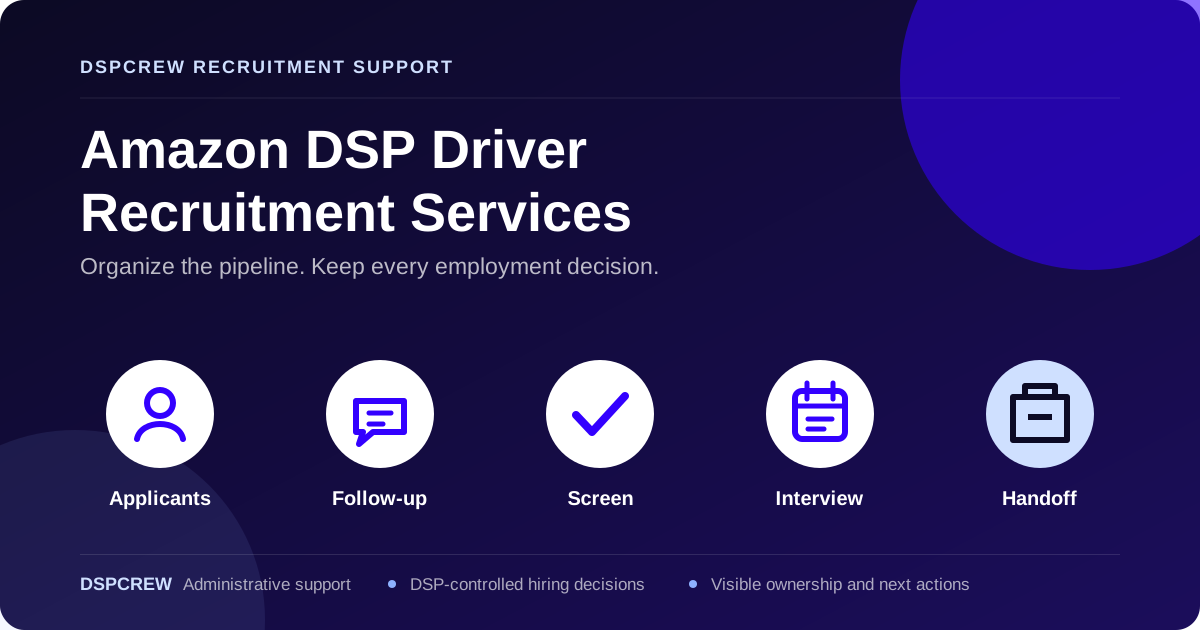
Keep your hiring pipeline moving with organized applicant follow-up, initial screening administration, interview scheduling, onboarding coordination, and clear recruitment reporting built around Amazon DSP operations.
For Amazon Delivery Service Partner owners and operations teams.
Direct answer
Amazon DSP driver recruitment services can organize applicants, candidate follow-up, initial screening administration, interview or orientation scheduling, next-step coordination, onboarding-status tracking, and recruitment reporting. DSPCrew provides administrative and process support within the DSP's approved workflow. The DSP remains the employer, controls compensation and employment policies, evaluates candidates, and keeps final hiring authority.
Pipeline friction
A recruiting pipeline usually slows because ownership and next actions are unclear, not because there are too few spreadsheets.
Applicants wait without a named owner, a recorded contact attempt, or a clear next action.
Calls, texts, and emails happen across separate inboxes without one current candidate record.
Interview details are sent once, but confirmations, reminders, and rescheduling are not consistently managed.
Missing approved preliminary information is discovered late, delaying management review and the next step.
Recruiting marks a candidate ready without a documented owner, start status, or management handoff.
Peak demand adds administrative work while owners and managers are already focused on routes, attendance, and station execution.
Service scope
The exact scope is documented with your team. DSPCrew administers approved steps and keeps progress visible while your DSP retains employment authority.
Keep every active applicant in a defined stage with an owner and next action.
Administer the approved communication cadence without leaving status in individual inboxes.
Collect consistent preliminary information for DSP review using the DSP's approved criteria.
Connect candidates with approved time slots and keep attendance outcomes visible.
Track approved next steps and prepare a documented management handoff.
Give management a stage-based view of activity, aging records, and required decisions.
Provider-controlled steps: Where included in the agreed workflow, DSPCrew can coordinate status and follow-up with the DSP's approved screening, training, payroll, or HR providers. DSPCrew does not control their decisions or processing.
Delivery model
Each stage identifies the administrative work, the input your DSP supplies, and the record that keeps the handoff accountable.
Pipeline visibility
The workflow is configured around the DSP's approved process and systems. A shared stage language lets recruiting and operations see the same next action without exposing candidate information in public examples.
Conceptual workflow view
Clear ownership
The matrix separates administrative support, employer decisions, and steps controlled by Amazon or another provider.
| Recruitment activity | DSPCrew support | DSP management responsibility | External provider or Amazon-controlled step |
|---|---|---|---|
| Job requirements | Document and administer approved criteria | Define and approve lawful, job-related requirements | Not applicable |
| Job-posting administration | Prepare and maintain approved listing content | Approve role, compensation, location, and claims | Platform controls publication and policy |
| Applicant organization | Record stage, owner, and next action | Approve systems, access, and retention rules | Platform availability may apply |
| Initial follow-up | Use approved messages and record outcomes | Approve cadence, templates, and escalation | Carrier or platform delivery is outside DSPCrew control |
| Preliminary screening administration | Collect approved information and flag review needs | Set criteria and evaluate suitability | Legal or HR advisers guide requirements when needed |
| Interview scheduling | Coordinate slots, reminders, and attendance status | Supply interviewers, availability, and process | Calendar or platform availability may apply |
| Interview decision | Record the management outcome | Interview and decide whether the candidate proceeds | Not applicable |
| Compensation decision | Communicate only approved information | Set and approve compensation and benefits | Applicable requirements remain with the DSP and its advisers |
| Offer approval | Coordinate approved next steps | Authorize and issue the employment offer | Provider workflow may apply |
| Background-check status coordination | Track administrative status when included in scope | Select provider and make permitted employment decisions | Approved provider performs and controls the check |
| Drug-test status coordination | Track administrative status when included in scope | Set approved process and make employment decisions | Approved provider performs and controls testing |
| Training coordination | Track scheduling and status where access permits | Confirm candidate direction and management ownership | Amazon or training provider controls requirements and completion |
| Onboarding documentation | Track approved forms and missing items | Define required documents, policies, and approval | Payroll, HR, insurer, or government systems may control steps |
| Final employment decision | Record the decision and approved status | Make and document the final decision | Counsel or HR advisers may guide the DSP |
| First-day operational handoff | Prepare status summary and unresolved-item list | Own scheduling, station expectations, and supervision | Amazon-controlled training or access may affect readiness |
Employer authority
Clear boundaries make administrative support useful. DSPCrew organizes the process and the record; your DSP sets employment requirements and decides who joins or leaves the team.
Source boundary: Amazon's public delivery-driver information describes each DSP as independently responsible for hiring, performance management, and termination of its employees. Review Amazon's description of the DSP employer relationship.
Operating-model decision
Neither model is automatically better. The right choice depends on recruiting volume, internal coverage, management time, and how much local work must remain with an employee.
| Consideration | In-house recruiting | External administrative support |
|---|---|---|
| Management control | Direct employee oversight | DSP retains decisions; provider administers agreed steps |
| Direct local knowledge | Often strongest for station-specific context | Must be supplied through onboarding and escalation rules |
| Fixed overhead | Salary, management, tools, and coverage | Scoped service cost; request a quote |
| Recruiting coverage | Depends on internal staffing and absences | Coverage is defined in the service scope |
| Process consistency | Depends on documentation and supervision | Specialized workflow can standardize administrative steps |
| Peak-season scalability | May require hiring or reassignment | May flex if capacity is agreed in advance |
| Reporting | Can be tailored directly by the team | Stage and action reporting is part of the agreed workflow |
| Internal supervision required | Manager supervises the recruiter | Manager still owns criteria, decisions, access, and escalations |
| Continuity | Depends on employee coverage | Depends on documented provider coverage and handoffs |
| Workflow specialization | Built internally over time | Provider brings an established administrative process, adapted to the DSP |
Operational context
DSP recruiting does not end when a candidate appears interested. Hiring demand connects to expected routes, current capacity, attendance reliability, onboarding readiness, and the date operations can actually receive a new driver.
Weekly targets should trace back to expected routes, active drivers, availability, turnover, training lead time, and the reserve coverage chosen by management.
A candidate may be waiting on a management decision, onboarding item, provider status, training step, or station handoff. The record should show which one.
Managers need to see stalled records, decisions due, start readiness, and ownership. A raw list of names does not provide that handoff.
DSPCrew applies an operations-aware administrative workflow. It does not claim access to proprietary Amazon information, insider status, or control over Amazon systems.
Working requirements
DSPCrew works from your approved requirements. Access is requested only after scope, security, and account ownership are agreed.
Usable outputs
Deliverables are configured to the agreed workflow. They are operating records, not claims of a proprietary recruiting platform.
Assessment and scope
We identify how applicants enter, who follows up, where decisions occur, and where records stall.
We separate administrative work, DSP decisions, and provider- or Amazon-controlled steps.
You receive a proposed service scope based on the workflow and coverage discussed. No public recruitment package price is currently configured.
If you proceed, accounts, templates, escalation contacts, and reporting are approved before workflow administration begins.
Pricing
Recruitment support varies by workflow, coverage, systems, and responsibility boundaries. DSPCrew does not publish an unverified starting price.
Planning resource
The pillar guide explains capacity planning, candidate communication, screening administration, interview scheduling, onboarding, responsibility boundaries, and first-week handoff in one practical system.
Read the complete Amazon DSP driver recruitment and onboarding guide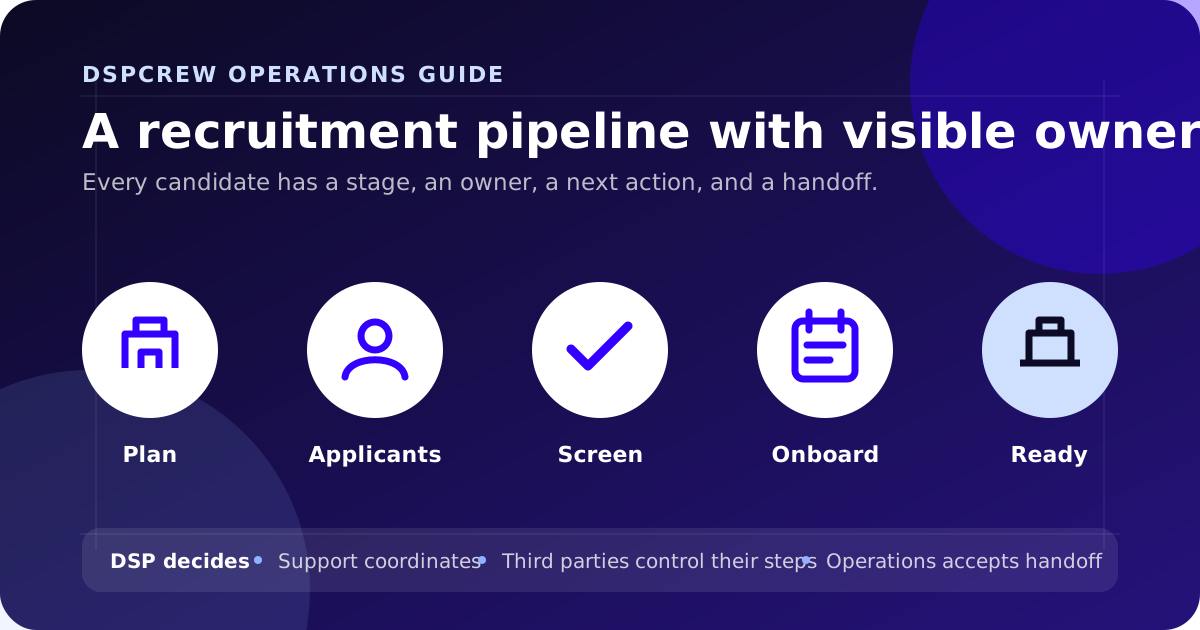
Questions before an assessment
Amazon DSP driver recruitment services provide administrative support for organizing applicants, following up with candidates, administering approved preliminary screening, scheduling interviews or orientations, coordinating onboarding status, and reporting pipeline progress. The DSP remains the employer and makes every final employment decision.
Yes. A DSP can delegate defined administrative steps while keeping compensation, employment policies, evaluation criteria, offers, and hiring decisions in-house. The service agreement should document scope, access, escalation paths, data handling, and decision ownership.
No. DSPCrew can organize information and administer the agreed workflow, but DSP management evaluates candidates and makes the final hiring decision.
Depending on the agreed scope, DSPCrew can support applicant organization, candidate follow-up, approved first-level screening administration, interview and orientation scheduling, next-step reminders, onboarding-status tracking, reporting, and operational handoff preparation.
Yes. DSPCrew can coordinate approved time slots, send confirmations and reminders, record attendance outcomes, and organize rescheduling. Your DSP supplies availability, interview owners, locations or links, and escalation rules.
Yes. DSPCrew can track approved onboarding steps, follow up on pending items, record provider-controlled status, and prepare a readiness handoff. Your DSP defines the official requirements and determines when a candidate may proceed.
DSPCrew does not claim to be a background-check provider. When included in scope, DSPCrew may coordinate administrative status and follow-up with the DSP's approved provider. The provider controls its process and results, and the DSP controls resulting employment decisions with appropriate advice.
DSPCrew can generally work within approved client systems and workflows, subject to access, security, provider permissions, and agreed scope. Compatibility and account controls are confirmed during the assessment before access is requested.
Reporting can show stage, owner, last contact, next action, due date, pending items, scheduled interviews, completed interviews, onboarding status, stalled candidates, and escalations. The exact view is agreed with the DSP.
Support may be useful when managers are handling repetitive applicant administration, follow-up is inconsistent, scheduling consumes station time, candidate status is difficult to see, or changing volume exceeds current administrative coverage.
Administrative coverage can be scoped around changing volume when expectations, capacity, access, response rules, and decision owners are agreed in advance. Candidate volume, hiring speed, and results are not guaranteed.
Use the recruitment assessment form to describe your current workflow. DSPCrew will review the process, clarify responsibility boundaries, identify the administrative scope, and provide a written scope and quote before access is requested.
Recruitment assessment
Organize applicant follow-up, screening administration, interview scheduling, onboarding coordination, and recruitment visibility around a process your management team controls.
DSPCrew is an independent service provider and is not affiliated with or endorsed by Amazon.com, Inc. No candidate suitability, hiring, compliance, or retention outcome is guaranteed.